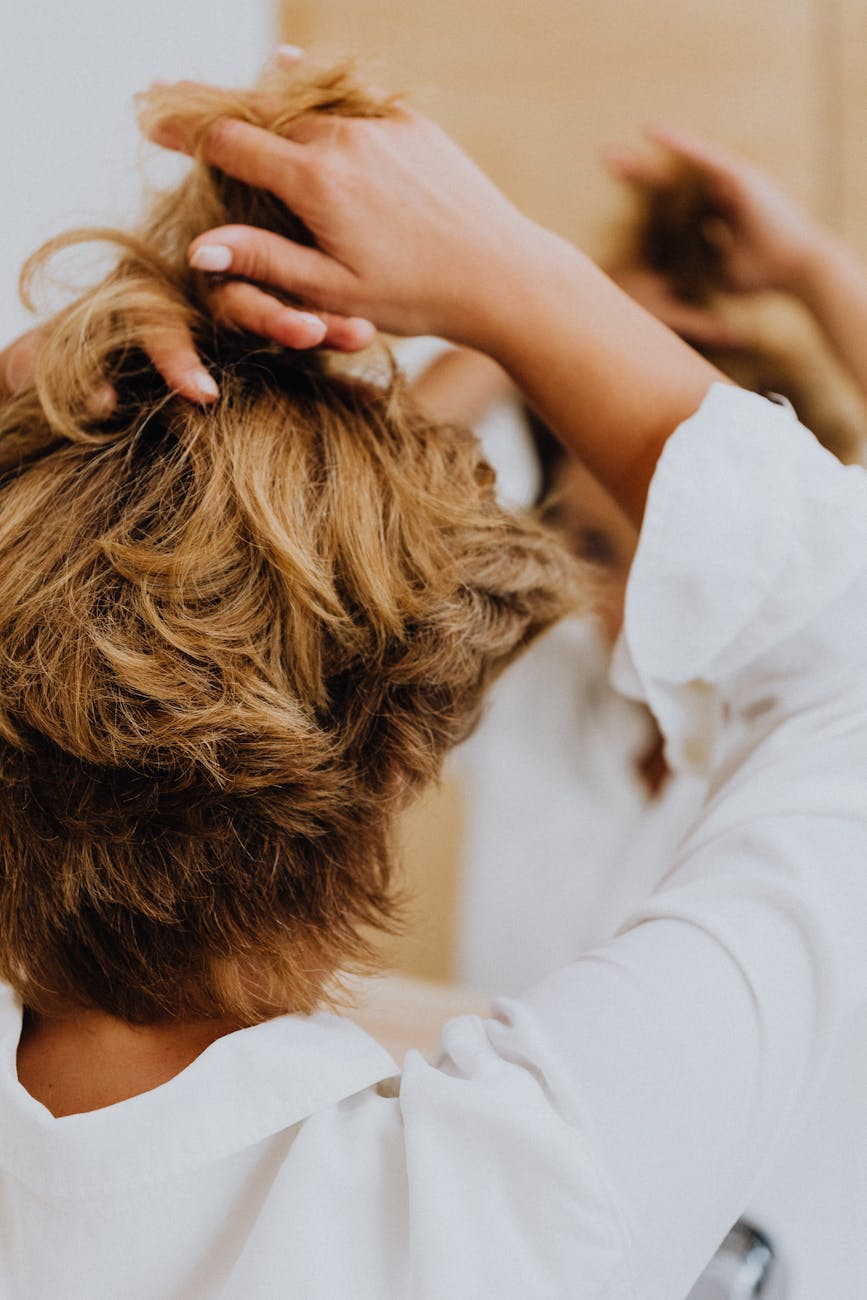
Our scalp and hair need care and protection. I think it’s really helpful to know how the products are meant to support your hair and scalp, and what you REALLY need to maintain a healthy, full head of hair. I’m going to get a little wonky, and walk you through my process for selecting products.
My standards are high, I have extremely sensitive skin and sensory issues. I try to support small businesses where I can, and require transparency from my vendors.
***I do not buy hair products or tools from Amazon, they are often expired, diluted, tainted, broken, or diverted products that are in direct violation of distribution contracts. And Jeff is fine, he doesn’t need our money, and he treats his employees poorly.***
Must Have/Do regardless of brand
It took me years to satisfy my own criteria.
Here’s the short version.
- Gender Neutral & Work on ALL Hair Types & Textures
- Free from harmful ingredients, testing, manufacturing, & distribution. (to humans, animals, planet & small business)
- Scalp first approach to hair care
- Performance! They must do what they need to do
- Concentrated, no added water or fillers which dilute & weigh them down in shipping
- Avoid single use plastic where possible

I spend hours pouring over product knowledge videos, studying ingredients list, and working with products just to get a feeling for a new line.
First Consider
Your Scalp Condition
You should see a Dermatologist if you experience any of the following:
- Signs of infection: Redness, warmth, swelling, pus, or fever
- New or worsening symptoms: Symptoms that occur more often or are more severe
- Pain, sensitivity, burning, or itching: These can be signs of an underlying medical condition
- Unexplained hair loss: You should see a doctor if you experience unexplained hair loss on your scalp
- Home treatments aren’t effective: If home treatments aren’t working, you should talk with a doctor
Minor scalp conditions, such as dandruff can often be treated with home remedies:
- Daily (or almost) shampooing, focusing on your scalp and the roots of your hair
- Using a scalp rinse/treatment to help support a healthy scalp and hair growth
Avoid scalp treatments if you have psoriasis, eczema, open cuts, infections, or sores.
Your Hair Porosity
Hair porosity refers to how well hair absorbs and retains moisture:
- Low porosity Hair cuticles are tightly closed, making it difficult for moisture to enter or escape. This type of hair can take a long time to dry and is prone to product buildup.
- Medium porosity Hair cuticles are less tightly bound, allowing moisture to penetrate the hair shaft. This type of hair can hold moisture for a long time and accepts color well.
- High porosity Hair cuticles are more widely spaced, allowing moisture to easily pass in and out. This type of hair is often frizzy and can feel dry.
The goal is to balance or maintain the moisture in the hair.
You can test your hair’s porosity by dropping a few strands of clean, product-free hair into a glass of water:
- Low porosity: Hair floats
- Medium porosity: Hair sinks slowly or settles in the middle
- High porosity: Hair sinks quickly

Let’s break it down by function.
What and Why
Cleanse/Condition
Not optional.
- You need to cleanse your scalp regularly to create optimal conditions for hair growth.
- After cleansing you need to condition the hair, which closes the cuticle making it easier to detangle.
- Unless you use a co-wash, a conditioning cleanser, like Cult+King -Cream Pop or Hairstory -New Wash, type product.
Prep/Protect
Not optional
- Leave-In environmental protection & hydration, with a slightly acidic PH.
- *Water’s PH is around 7 whereas your hair and scalp are between 4.5-5 rinsing throws you off
- It is crucial to use a heat protectant, if you use hot tools on your hair.
- Some Leave-Ins are heat protectants
Support
Optional or As Needed
- Styling products for texture, control, hold and/or polish.
- Anti-Humectant or Frizz Control
- Although I’d argue it’s not optional for most curls
- Weekly Rinses
- Clarifying Treatment
- Deep Conditioning Treatments
- Hair-loss Treatment
Check the ingredients list. Keep it clean, keep it simple. Read the labels or product descriptions online.


Needs By Texture
Generally Speaking of Course, considering the vast array of variables
*If you are using hot tools to style your hair you must use a heat protectant!!
Straight
Daily wash : Gentle cleanser : Light-weight Conditioner
Light-weight Prep/Protect : Support for texture and polish
Weekly Scalp Treatment
Wavy
2-3 days between washes : Gentle cleanser : Mid-weight Conditioner
Mid-weight Prep/Protect : Support for texture, control, hold
Scalp Treatment as Needed
Curly
4-7 days between washes : Gentle cleanser : Mid-Heavyweight Conditioner
Mid-weight Prep/Protect : Hydrating Leave-In : Support for texture, control, hold
Weekly Scalp Treatment

Home Remedies for Scalp & Hair

Curated Collection of Styling Tutorials

Leave a Reply